
Understanding Local Governance
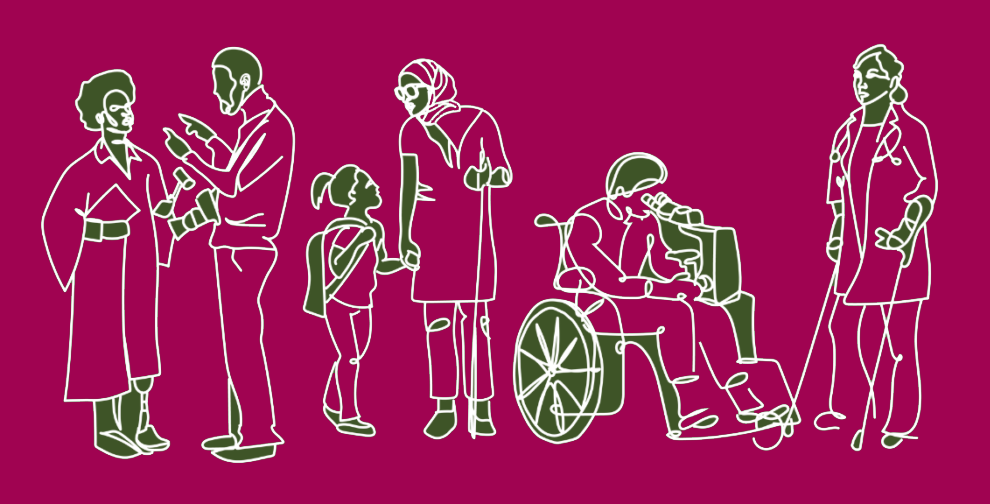
What would it look like for a marginalized community to take up space and influence a political landscape? In the spring of 2025, I became the Federal “paper” candidate for the Green Party of Canada, representing Laval, Quebec. As a female-identifying person born to a first generation Okinawan-Japanese mother and Indigenous-European father, as well as brothers who are all against being disabled as if it was a choice, I was grappling with internalized ableism while speaking to voters in Laval with a healing concussion and a variety of secret diagnosis. I was not aware of the #CripTheVote online movement, nor how it could have empowered my own candidacy and family dynamics. Fighting the internal shame that was built against my disabilities, I held back while gathering signatures, which led me to be eight signatures short of having my name on the ballot. Canadian leaders are able to learn how the movement #CripTheVote successfully influenced voter support and legislative changes through recognizing the importance of including disabled voices, the ways that constituents mobilize, and how to involve the intersections of disabled people.
The 2022 Statistics Canada shows that there are a reported 8 million people over the age of 15 living with disabilities, which makes up 27% of the population (Statistics Canada, 2023), which is a significant amount whose concerns need to be acknowledged. With such a large population, there is no wonder that there are groups in the community who have gathered together to highlight their empowerment (such as with the Disability Collective, Disability Justice Network of Ontario, and the AODA Alliance), or create Care teams to fill the gaps within society where the government falls short (Lakshmi, Care Work). These movements are happening all over the world. My mother had a severely disabled brother and aunt while growing up in Okinawa during and post World War II, and taught us that although my father was also disabled, this was not something that was accepted in our household. While living in Okinawa between 2014 and 2023, I witnessed the barriers that are still present in Japan as disabled politician Eiko Kimura highlighted; the lack of social participation in working and leisure activities due to discriminating barriers. (Wong, 2020). The ability to be politically active in a deeply conservative country highlights the movement of some of the fundamental rights to disability justice such as Leadership Of Those Most Impacted, Recognizing Wholeness, and Interdependence (Berne, 2016). The amount of disabled people increased across all provinces significantly between 2017 and 2022 (Statistics Canada, 2023), and we can expect those numbers to only rise over the coming years, which makes the timing imperative to hear these voices.
Traditional mobilization of candidate support includes canvassing throughout communities, but for many in disabled communities, online activism has been the essential tool in reaching eligible voters. Through the #CripTheVote movement initiated by three activists, many methods of communication were able to be utilized by everyday people, including 24 hour tweeting, podcasts, live chats with people such as Senator Elizabeth Warren and Pete Buttigieg, and art, which resulted in increased representation from the 2016 Federal elections to the ones in 2020 (Wong, 2021). In an interview with Reyma McCoy McDeid, a Democratic candidate from Iowa, there was recognition for more tools needed to support disabled candidates as she discussed the resource Emily’s List, to guide women to join in politics (Wong, 2018). Two years later, Erin Gilmer published the “Preface to Advocacy” on Google Docs which offers advice to advocates who are just getting started (Gilmer, 2020), offering the mentorship needed in the volatile landscape. Alongside #CripTheVote, participants were also invited to share stories online through #SaveMedicaid, which deepened the conversation into the importance of government-supported health care (Wong, 2017a). Further, the Art for the Resistance, created by the Disability Visibility Project (Wong, 2017b), makes the visualizations accessible to everyone through personally shared online posts, without limits of a restrictive curator, as was witnessed in “Fixing” (Frazee et al., 2016 ).
Legacy politicians who are cis white hetero men, may have gained their position through inherited nepotism (such as theKennedys, the Bush family, and even the Trudeaus in Canada), but disability movements offer voices to marginalized people who are challenging the status quo. Along the intersections, Reyma McCoy McDeid has stated that even their own party did not believe that the autistic black woman was a viable candidate. It came as a shock to many that she received national attention for her presence on the ballot, and although she did not win, she was able to connect with senators to introduce a bill that allowed campaign finances to cover care support (initiated by her need for support for her child) (Wong, 2018). The #CripTheVote reaches further into the margins as it discusses acts about incarceration and disabilities, such as 85% of incarcerated youth having a learning or emotional disability (Wong, 2016a). The movement has areas of improvement through the need to centre Indigenous and Immigrant voices, as well as survivors of the psychiatric industry, although it does offer a lot of space for others to lead. After the 2016 elections were over, the author of “So you want to talk about race”, Ijeoma Oluo, started the conversation within #CripTheVote by starting her own hashtag #WhatsNext (Wong, 2016b).By opening spaces for marginalized voices to lead discussions within the community, the movement was able to ride the wave into planning for the future of disabled activism in politics.
The leaders of these changing times are able to learn so much from the movement #CripTheVote movement through recognizing the importance of including disabled voices, the ways that constituents mobilize, and how to involve the intersectionality of disabled people. As Canada and the US move further into extreme political ideology and eugenics, it will be imperative for the counter-movements to adapt new techniques, and learn from what has already been done. Above all, representation of the disabled population within politics is essential, and that happens when the voices who are already doing the work are amplified. Those who have been taught to hide or shame their disabilities no longer need to do so, as there is strength in presenting as their authentic self, especially as they aim to move into leadership positions.
References:
-Statistics Canada. (2023, December 1). New data on disability in Canada, 2022. https://www150.statcan.gc.ca/n1/pub/11-627-m/11-627-m2023063-eng.htm
-Wong, A. (2020, November 10). Q&A with Eiko Kimura 木村英子様との質疑応答 [Q&A with Eiko Kimura]. Disability Visibility Project. https://disabilityvisibilityproject.com/2020/11/10/qa-with-eiko-kimura/
-Berne, P. (2016). Skin, Tooth, and Bone: The Basis of Movement Is Our People: A Disability Justice Primer. Sins Invalid.
-Wong, A. (Host). (2021, March 21). Ep 99: Online activism [Audio podcast episode]. In Disability Visibility Project. https://disabilityvisibilityproject.com/2021/03/21/ep-99-online-activism/
-Wong, A. (Host). (2018, November 4). Ep. 37: Political participation [Audio podcast episode]. In Disability Visibility Project. https://disabilityvisibilityproject.com/2018/11/04/ep-37-political-participation/
-Gilmer, E. (2020, August 26). A preface to advocacy: What you should know as an advocate. Disability Visibility Project. https://docs.google.com/document/d/1SDomTEAcPhlM3DgZ73l4YGj9Q9N6liNjfKWHTQMmrZU/edit?tab=t.0
-Wong, A. (2017a, July 11). #CripTheVote Medicaid stories. Disability Visibility Project. https://disabilityvisibilityproject.com/2017/07/11/cripthevote-medicaid-stories/
-Wong, A. (2017b, July 11). Crip Resistance: Art for the Resistance. Disability Visibility Project. https://disabilityvisibilityproject.com/2017/07/11/cripresistance-art-for-the-resistance/
-Frazee, C., Church, K., & Panitch, M. (2016). Fixing: The claiming and reclaiming of disability history. Mobilizing metaphor: Art, culture, and disability activism in Canada.
-Wong, A. (2016a, June 6). 6/18 #CripTheVote chat: Mass incarceration, disability & the legal system. Disability Visibility Project. https://disabilityvisibilityproject.com/2016/06/06/618-cripthevote-chat-mass-incarceration-disabilit…
-Wong, A. (2016b, November 10). 11/10 post‑election #CripTheVote chat: What’s next? Disability Visibility Project. https://disabilityvisibilityproject.com/2016/11/10/1110-post-election-cripthevote-chat-whatsnext/Jul 28, 2026
© 2026 Victoria Davis All rights reserved
Leave a Reply